
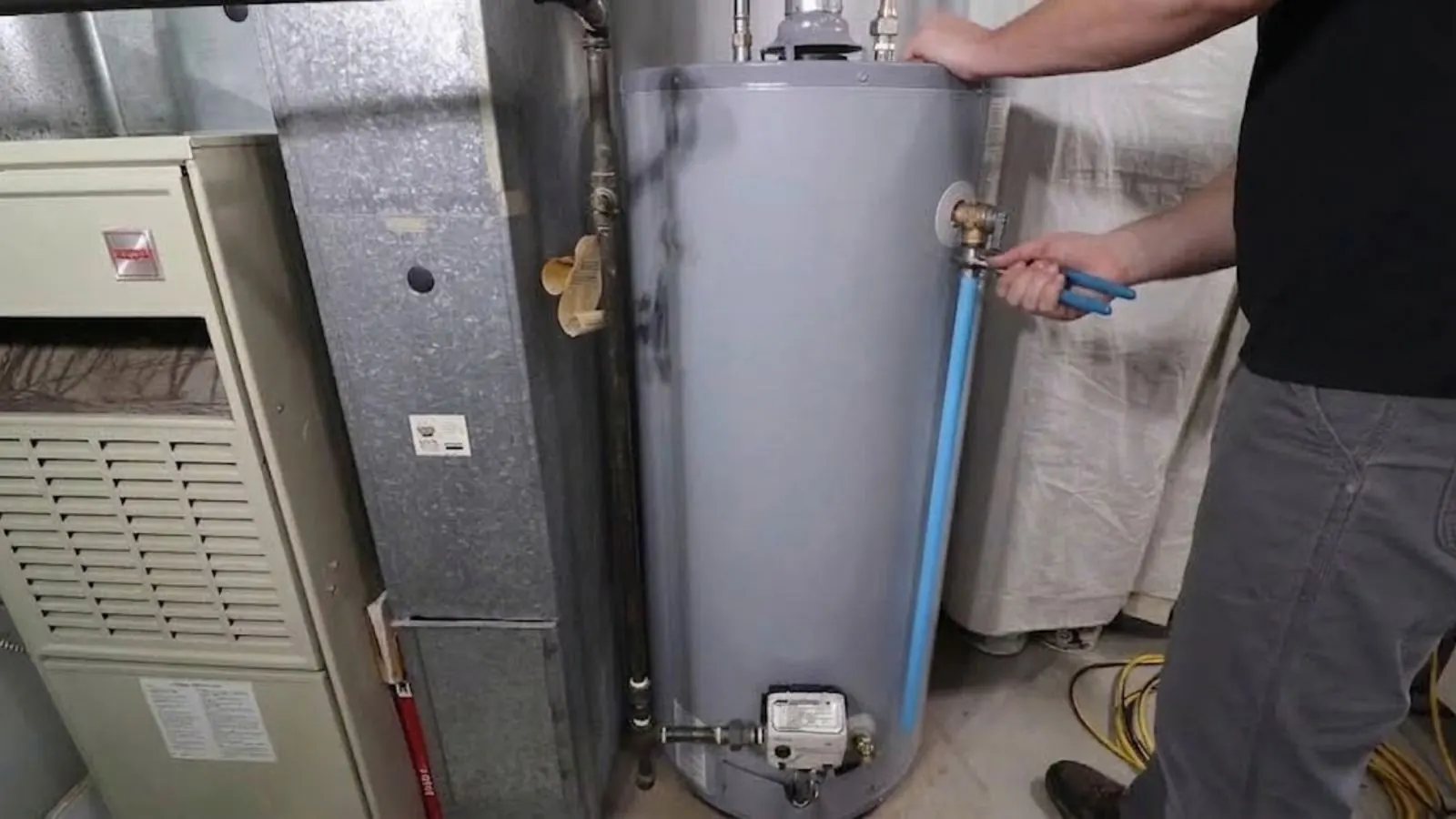
Start with how your household uses hot water
The right heater is the one that fits your habits. A couple that showers at different times needs far less storage than a family where three people shower before school. Count the people, the big fixtures such as a soaking tub, and any simultaneous use like a dishwasher running during a shower.
That count drives capacity and recovery rate, which is how quickly a heater refills with hot water. A tank that is too small runs out, and one that is too large wastes energy keeping extra water warm all day.
Heater types compared without the sales pitch
| Type | How it works | What the install needs |
|---|---|---|
| Gas storage tank | Burner heats a tank of water | Gas line, flue to the outdoors, relief valve and discharge pipe |
| Electric storage tank | Two elements heat the tank | Dedicated circuit and breaker, relief valve and discharge pipe |
| Heat pump (hybrid) tank | Pulls heat from room air and uses elements as backup | Electric circuit, a drain for condensate and enough air space around it |
| Tankless gas | Burner heats water as it flows | Properly sized gas line, sealed venting, and often a condensate drain |
| Tankless electric | Elements heat water on demand | A large electrical supply, often a service panel review |
Tankless options get their own full treatment on our tankless page.
Where it goes matters as much as what it is
Clearances are written into the manufacturer's instructions and the code. A gas heater needs combustion air and a clear flue path, while a heat pump heater needs open space so it can draw warmth from the room. Putting either one in a tiny closet can cause trouble that no amount of skill fixes later.
Think about leaks too. A heater above a finished ceiling or next to carpet deserves a drain pan piped to a safe spot. If the heater sits in an Easton garage or crawlspace, winter exposure is a factor, so insulation and freeze protection should be part of the plan.
Ready to plan the install
Call us, tell us the fuel and location, and we will set a time that works for your household.
From first call to inspected install
Walk the space
The plumber looks at the current setup, the gas or electric supply, and the route for venting and drains.
Choose and confirm
You agree on the unit, the scope and a clear price before work starts.
Pull the permit
The licensed plumber applies to the local inspector, as Massachusetts requires for new and replacement installations.
Install and connect
The heater is set, piped, vented and wired or gas-connected, with a relief valve and discharge line.
Test and hand over
Combustion, temperature, joints and safety devices are checked, then the inspection is arranged.
Walk-through
You are shown the shutoffs, the temperature setting and the maintenance schedule.
Safety items every installation should include
These are the details that separate a clean installation from one that causes problems later.
Install safety checklist
- Temperature and pressure relief valve with a full-size discharge pipe
- Shutoff valves on the cold supply and, for gas, the gas line
- Flexible connectors or unions that allow service later
- Proper flue slope and sealed joints on gas units
- Expansion tank where the plumber finds one is needed
- Carbon monoxide alarm in the living space for any fuel-burning appliance
If you smell gas at any stage of a project, leave the house and call your gas utility or 911 before you call anyone else.
Permits, inspection and the Massachusetts rulebook
Under 248 CMR, plumbing and gas fitting work cannot be installed, altered or replaced until the local inspector issues a permit. An application is made in writing before the work starts, and the inspector is required to act on it within two working days. That acting is not the same as approval, so inspection still follows.
Only licensed individuals can apply. The state's online license lookup lets you check any plumber in a minute, and it is worth doing before you sign anything. If a company suggests skipping the permit, take that as a reason to look elsewhere. Questions about local timing go to the Easton building department.
Local considerations for Easton homeowners
Easton draws its water from town wells, and the Easton Water Division publishes an annual water quality report. Reading it, or testing your own tap, tells you whether mineral buildup is a worry, and that influences how often you will flush the tank. We do not assume a hardness figure for your street.
If you are converting a house from oil-fired hot water to a standalone heater, say so up front. The change can involve chimney work, a new gas or electric supply and a different location, and all of it affects the scope of the job.
What shapes the cost of an installation
We give a clear price before work starts. The following explain why two installs rarely cost the same.
What moves the price
Rebates for efficient heaters may be available, so check eligibility with your utility before you buy and keep your paperwork.
☎ Want your real number? Call (508) 389-4045Water heater installation questions from Easton homeowners
A straightforward tank replacement is often a half day, while a fuel change, new venting or a tankless conversion can take longer. The plumber confirms the plan after seeing the space.
Yes. We install in new bathrooms, additions and finished basements, coordinating with other trades where needed. Related fixture work is on our plumbing installation page.
Yes. Massachusetts requires a permit before plumbing or gas fitting work, and the licensed plumber pulls it. Ask the Easton building department about inspection scheduling.
They can save energy but need space, air and a condensate drain. We will say honestly whether your basement suits one.
Call the 24/7 line. We handle failed units on an emergency basis, as described under water heater replacement.
Yes. Installs are scheduled across Mansfield, Norton, Sharon and the rest of our service area.