
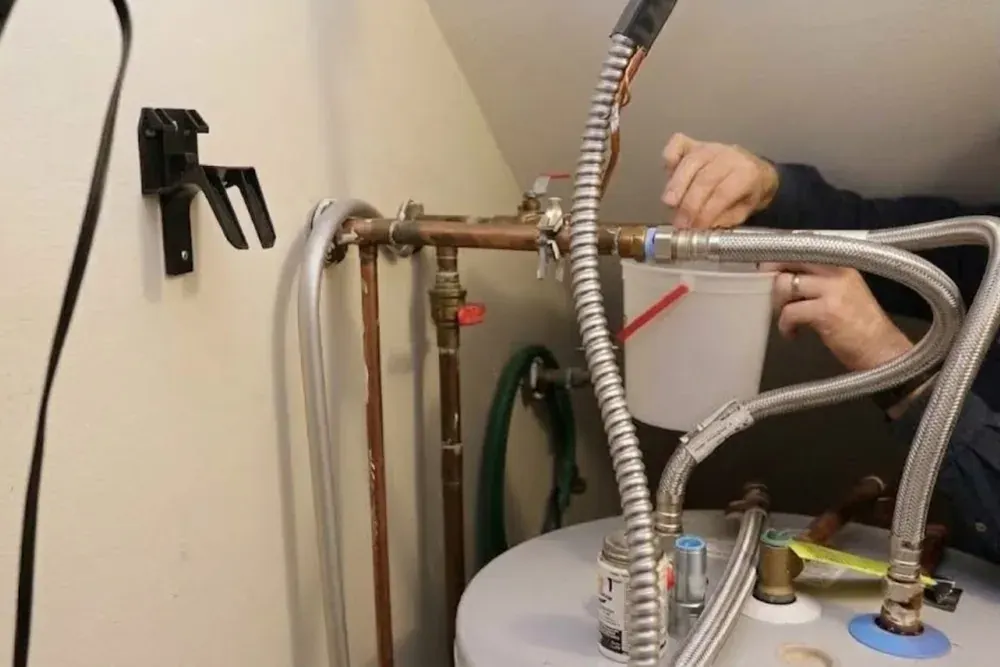
No hot water or a leak: what to do first, gas smell included
If you smell gas near the heater, do not touch a light switch, do not look for the leak, and do not call us first. Leave the house, then call your gas utility's emergency line or 911 from outside. We can help once the gas company or fire department says the home is safe.
A leaking tank is a different problem. Shut the cold water supply valve on the pipe above the heater, and for an electric unit switch off its breaker so the elements are never energized while exposed to water. For a gas unit, turn the gas control to pilot or off. Then call the 24/7 line.
Signs your water heater needs attention
Heaters usually give warnings before they quit. Matching the symptom to the likely cause saves time on the phone.
Lukewarm water or short hot supply
On an electric unit, a failed lower element or thermostat is common. On a gas unit, a dirty burner or weak thermocouple can do the same. Both are repairable.
Rumbling, popping or ticking
Sediment builds on the tank bottom and traps steam under it. A flush can help a young tank, but a tank full of hardened scale is often near the end.
Rusty hot water or a damp base
Rust in hot water only points at the tank. Moisture around the base can be a loose fitting or a failed tank, and only a look tells you which.
Pilot will not stay lit
A worn thermocouple or a draft problem is the usual cause. Repeated outages are a reason to have the venting checked, not just the pilot.
Water dripping from the relief valve pipe
The temperature and pressure relief valve is a safety device. A steady drip can mean excess pressure in the system or a valve that has worn out.
Tripping breaker or burning smell
An electric heater that trips its breaker may have a shorted element. Turn it off and leave it off until it is checked.
Repair or replace: how the decision usually goes
Age is only part of it. A plumber weighs the failed part, the tank condition and what the repair would protect.
Repair makes sense when
- The tank is sound and not leaking from the shell
- The failed part is an element, thermostat, thermocouple, igniter or relief valve
- The heater is mid-life and was running well until now
- Venting and gas connections look correct
Replace makes sense when
- Water is coming from the tank body itself
- The bottom of the tank is heavily scaled or corroded
- Several parts have failed in a short time
- The unit is well past the 10 to 15 years a tank commonly lasts
If replacement is the honest answer, we say so before any work starts. You can read how that job goes on our water heater replacement page.
Heater down at any hour
Call the 24/7 line, name your fuel type, and a licensed plumber will plan the visit.
Common repairs by heater type
| Heater type | Part that often fails | Symptom |
|---|---|---|
| Electric tank | Upper or lower heating element | No hot water, or hot water that runs out fast |
| Electric tank | Thermostat or high-limit switch | Water too hot, too cool or the unit trips off |
| Gas tank | Thermocouple or flame sensor | Pilot goes out, burner will not stay on |
| Gas tank | Gas control valve or igniter | No ignition, clicking, no flame |
| Any tank | Relief valve or drain valve | Dripping at the valve or the discharge pipe |
| Any tank | Dip tube or anode rod | Cool water mixing in, or rotten-egg odor |
Some failures belong to the tank rather than the parts. If the shell is leaking, see our guidance on installing a new heater and the choices that come with it.
Why gas and electric heaters fail differently
Electric heaters are simple. Two elements heat the water, two thermostats control them, and most no-hot-water calls come down to one of those four parts. Because electricity and water share the tank, a plumber shuts the breaker off first and tests with a meter before touching anything.
Gas heaters add combustion, which adds failure points. The burner, thermocouple and gas valve need to work together, and the exhaust must leave the house through the flue. Any repair that touches the gas connection falls under Massachusetts gas fitting rules, so it is done by a licensed professional and not by guesswork.
Permits and Massachusetts rules for heater work
Under the Massachusetts plumbing and gas fitting regulations (248 CMR), most work on a water heater requires a permit from the local inspector, and only licensed plumbers or gas fitters can pull it. Fixing a leak in a valve or adjusting gas appliance controls without altering the supply connection is exempt, which covers many small repairs.
Replacing the tank, changing piping or altering the gas connection is not exempt. For anything beyond a minor part, ask the Easton building department what they expect. You can also verify any plumber's license through the state's online lookup before you let work begin.
Easton houses and what they do to water heaters
Many Easton basements hold a heater that has been there for a decade or more, often tucked beside an oil boiler or a laundry sink. Homes near North Easton's older streets may have mixed pipe materials around the heater, including galvanized steel nipples that corrode and seize when anyone tries to unscrew them.
Cold snaps raise the load on every heater. A unit in an unheated garage or crawlspace works harder in winter, and a pipe stub that freezes can crack right where it meets the tank. If your heater lives somewhere cold, tell the dispatcher, because it changes what we look for.
What a repair visit looks like
Make it safe
The plumber shuts off power or gas and the water supply as needed, and checks for leaks and combustion problems.
Diagnose the cause
Parts are tested one by one, so you pay for the failed part and not a guess.
Explain the options
You hear what is broken, what the repair involves and whether replacement is the better call.
Repair and test
The part is replaced, the heater is refilled and fired, and temperature and venting are checked.
What affects the cost of water heater repair
You get a clear price before work starts. These factors drive it.
What moves the price
If a leak has already wet the floor or walls, photograph the damage before cleanup and ask your insurer what it covers.
☎ Want your real number? Call (508) 389-4045Code and safety behind this page
Water heater work follows the state plumbing code, 248 CMR, and the manufacturer's guidelines for your unit. If you smell gas, the guidelines are the same everywhere: leave the building and call 911 or the gas utility before anyone else.
Water heater repair questions from Easton homeowners
Yes. Our line is answered all night, every weekend and on holidays. Tell the dispatcher if the heater is leaking or smells of gas, because those two need a different first step.
Leave the house right away and call your gas utility's emergency line or 911 from outside. Do not use switches, phones or flames inside. Call us after the utility confirms it is safe.
If the leak is at a fitting or valve, often yes. If water is coming through the tank shell, the tank cannot be repaired, and replacement is the next step.
A storage tank commonly lasts around 10 to 15 years, depending on the water and maintenance. Age alone does not decide it. Condition and the failed part do.
Small repairs like valves and gas control adjustments are exempt in Massachusetts. Replacing the tank or changing gas or water piping needs a permit pulled by a licensed professional.