
The short answer on sewer inspection cost
A sewer camera inspection is priced by the work involved, not by a fixed rate. The main factors are how easily the plumber can get a camera into the line, how long and deep the pipe runs, whether it has to be cleaned first, and what kind of report you want. We do not quote a number here because any number published without seeing your property would be a guess.
What you should expect is a clear price before work starts, an explanation of what the camera will cover, and a recording or notes you can keep. If a quote arrives without any of that, ask for it.
What moves the price of a camera inspection
These are the things a plumber weighs when quoting. Knowing them helps you compare two quotes fairly.
Cost factors for a sewer camera inspection
Some homeowner policies cover sewer backups only with an added endorsement, so ask your insurer what yours includes before you need it.
☎ Want your real number? Call (508) 389-4045Town sewer or septic: the difference in your inspection
Parts of Easton are on town sewer and parts use a private septic system, so the first question is what your line connects to. On town sewer, the inspection follows the lateral from the house cleanout out to the connection at the street. The plumber is looking for roots, breaks, bellies and offsets in your private lateral.
On septic, the camera runs from the house to the tank, and the inspection is a different job from the state's septic inspection. A plumber's camera look does not replace a Title 5 inspection when you sell, because Massachusetts allows only MassDEP-approved inspectors to perform that one. Tell the dispatcher which system you have so the right equipment arrives.
What a camera inspection shows
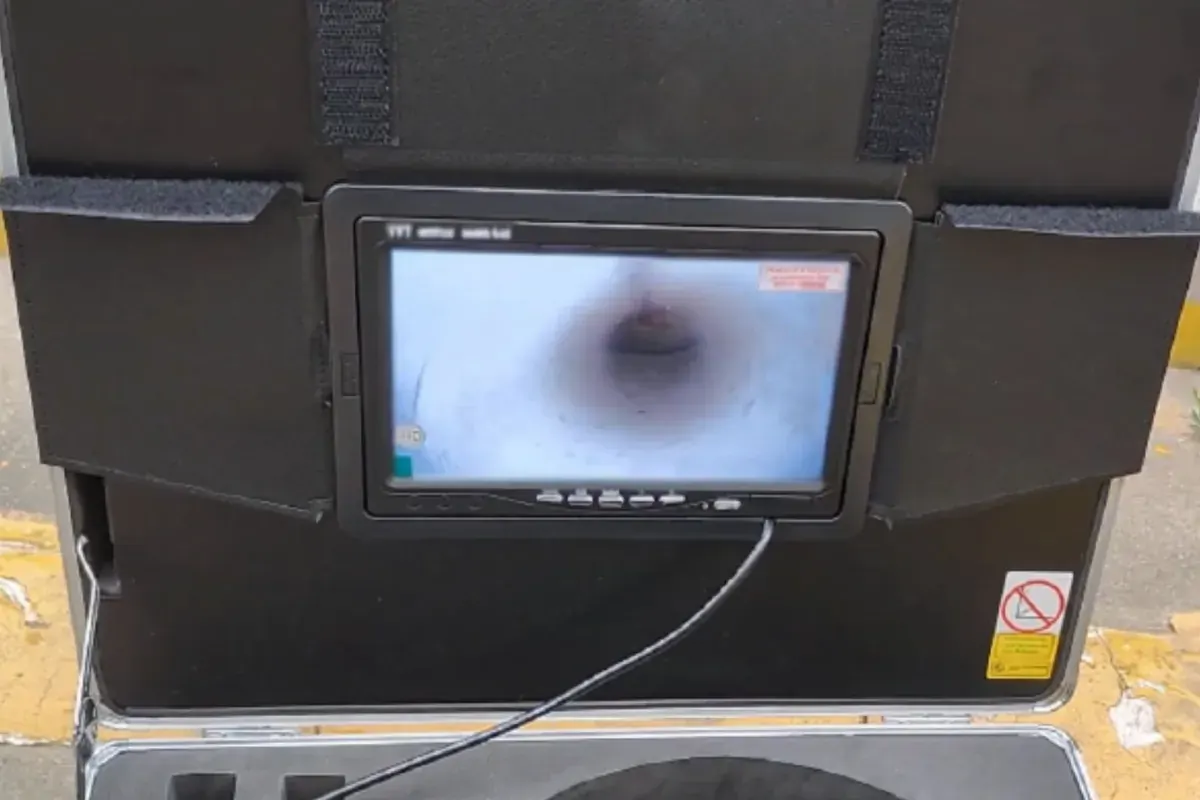
The camera sends live video of the pipe interior, and the plumber marks anything abnormal. The table lists the findings that matter most and what each usually means for your next step.
| What the camera shows | What it means | Usual next step |
|---|---|---|
| Fine roots at joints | Roots entered through small gaps | Cut the roots, then monitor or line the pipe |
| Standing water in a dip | A belly where the pipe has settled | Watch for repeat clogs, repair if it worsens |
| Cracked or broken pipe | Soil or ground movement damaged the line | Repair section, see sewer line repair |
| Offset joint | Pipe sections have shifted apart | Local repair or replacement |
| Heavy scale or grease | Buildup narrowing the pipe | Clean with a jetter |
| Clear, smooth pipe | No defects in the span inspected | Keep the recording as a baseline |
Title 5: when septic homes must be inspected
Under Massachusetts Title 5, a septic system must be inspected within two years before a sale, and also when you add a bedroom or change the use of the property. Only MassDEP-approved System Inspectors may do the inspection, and the report goes to the Board of Health within 30 days.
A system can pass, conditionally pass or fail, and a failed system must be upgraded within two years unless the Board of Health or MassDEP sets a different schedule. If you own an Easton home on septic, ask the Easton Board of Health how it handles these inspections.
Source type: Mass.gov guide, Buying or Selling Property with a Septic System (MassDEP Title 5)
Before you order an inspection
Work through this list so the visit is productive and the quote reflects the real job.
Sewer inspection prep checklist
- Find out whether your house is on town sewer or septic
- Locate the cleanout, often in the basement or near the foundation
- Make a note of the symptoms, such as gurgling, slow drains or odors
- Remember past clogs and repairs, including dates if you have them
- Clear a path to the cleanout and the main floor drain
- Ask whether the inspection is for a purchase, an insurance claim or a clog
- Ask if cleaning is included or billed separately
- Ask what you will receive after, such as video, notes and a written summary
If you are buying a house, have the camera look done before the inspection contingency ends. A broken lateral discovered after closing is your problem.
Why Easton houses are worth a look underground
Many houses near the village centers date from eras of clay and cast iron drains, and those materials crack, scale and take in roots as they age. Newer subdivisions were plumbed with PVC, which resists roots but can still shift or be crushed by heavy equipment during construction. Tree roots search out joints wherever a line runs under a mature yard.
Easton has wetlands such as the Hockomock Swamp area, and in wet ground a cracked joint can let soil and groundwater into a line. If a home has repeated backups, a camera inspection is cheaper than guessing. It shows whether the cause is a root, a belly or a collapse, and you can choose the right repair.
What happens during the visit
Locate the entry point
The plumber finds the cleanout or removes a fixture to reach the line.
Clear any blockage
If the pipe is too dirty to see through, it is cleaned first.
Run the camera
A flexible cable carries the camera along the pipe while video is watched live.
Mark the findings
Defects are noted by distance, and a locator marks them above ground when needed.
Explain the results
You hear what was found, what is urgent and what can wait. If it needs work, the plumber gives a clear price before starting.
When an inspection pays for itself
An inspection earns its cost when it prevents a surprise. Buying an older house, repeated backups, a new tree near the line, or a sewage smell in the yard are all reasons to look. Our sewer inspection service covers each of those, and clogs found along the way can be cleared on the same visit.
We serve Easton and nearby towns, including Brockton and Stoughton. If the line is already backing up, call the 24/7 line and stop using water in the meantime.
Title 5 and inspections
MassDEP's Title 5 standards require a septic inspection within two years before a sale, by an approved inspector. A camera inspection of a town sewer lateral is a separate, optional step.
Sewer inspection questions from Easton homeowners
No. Only MassDEP-approved System Inspectors can perform a Title 5 inspection for a sale or other trigger. A plumber's camera shows the condition of the pipe to the tank, which is useful but separate.
Ownership of the private lateral and the point where responsibility changes vary by town and by street. Ask the town (the building department can point you to the right office) to confirm for your address.
A simple one takes a short visit, but a long run, a blockage or locating work extends it.
No. The camera head is made for pipe interiors, and the plumber stops if it meets an obstruction it cannot pass.
It is worth considering, especially for an older home. A buyer can ask for it during the inspection period.
No. The camera sees the drain and sewer pipes only. A supply line leak calls for leak detection, which uses different tools.