
What a jetter does that a cable cannot
A drain cable is a spinning blade on a coil. It bores through the middle of a blockage and leaves a channel about the width of the blade, while the grease and scale on the pipe wall stay where they are. That is why a line can run fine for a month and then clog again in the same spot.
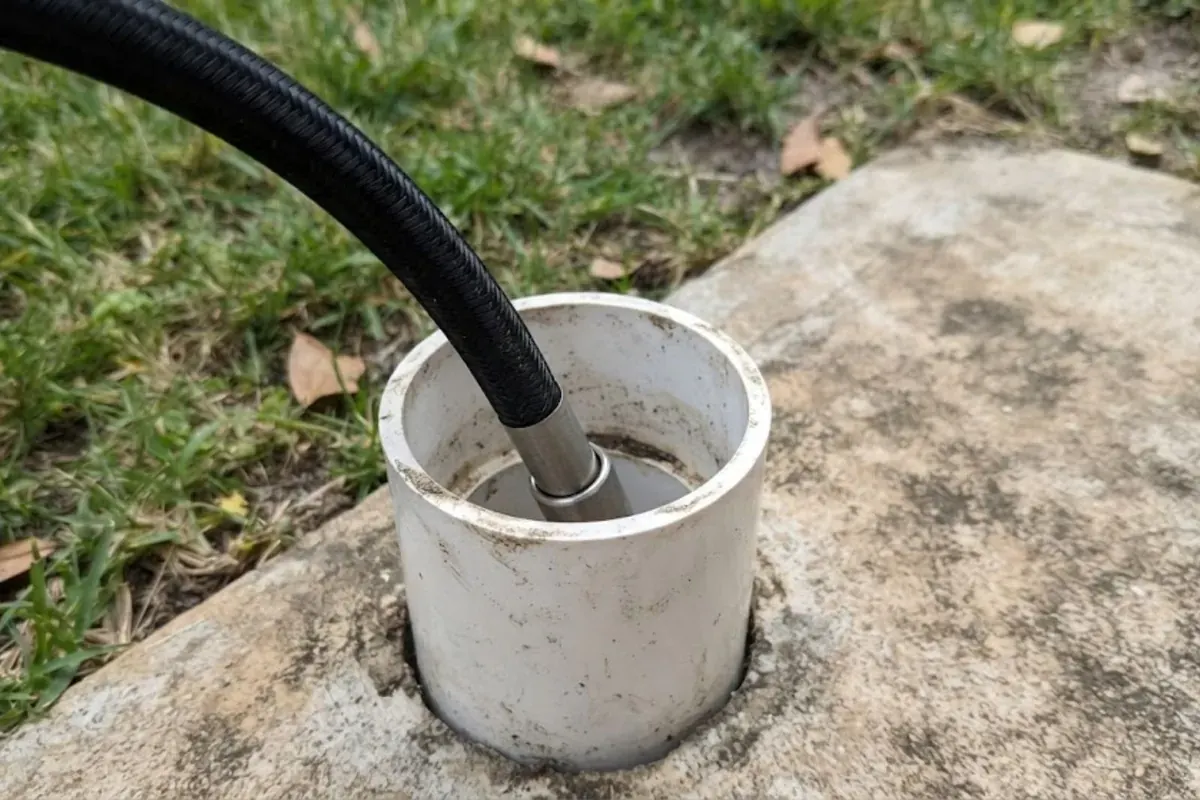
A hydro jetter pushes a hose with a nozzle down the pipe. Water leaves the nozzle in several angled jets, and the rear-facing ones pull the hose forward while the front ones break up the blockage. The spray scours the full circumference of the pipe and flushes the debris down to the sewer or out to a cleanout.
When jetting beats cabling
Neither tool is better in every case. The right choice depends on what is stuck, what the pipe is made of, and how long the line has been trouble.
Jetting is the better call
- Grease buildup in a kitchen or restaurant line that keeps returning
- Heavy scale or sludge coating the walls of cast iron
- Fine roots hanging in the pipe after a cable cut the thick ones
- A line that slows down again within weeks of being snaked
- Sand, silt or packed debris that a cable just pushes around
A cable is enough
- One clogged sink, tub or toilet with an obvious local cause
- A hairball or a wad of paper close to the fixture
- A first-time backup in an otherwise healthy line
- A pipe the camera shows is cracked, offset or collapsing
- Small-diameter branch lines where a jet hose will not turn
If you are not sure which side you are on, start with a call and describe the history. A line that has been cabled twice this year is a strong hint that the walls need cleaning, not another hole.
Pipe material matters before any water goes in
High-pressure water is safe in sound modern pipe and risky in tired old pipe. The plumber should look inside before deciding, which usually means running a camera down the cleanout or through a pulled toilet.
The camera tells you more than the age of the house does. A 1950s cape can have a healthy cast iron stack, and a 1990s addition can have a belly where the fill settled. What you want to know is whether the pipe will hold up to the work.
Pipes that handle jetting well
PVC and ABS, which most newer subdivision homes use, cope fine. Cast iron with a rough scaled interior is a good candidate too, as long as the walls are still thick and the joints are tight.
Pipes that call for caution
Old clay tile with cracked or shifted joints can let the jet blast soil into the line. Orangeburg, a tar-and-fiber pipe used in the mid-20th century, can deform or split. Thin, flaking galvanized steel and any pipe with a known collapse should be cabled gently or repaired first.
Signs your line needs more than a snaking
Backups that come back on a schedule
If the same drain stops every few weeks, something is coating the pipe or growing back into it. Grease and roots both behave this way.
Slow drains throughout the house
When the tub, the laundry standpipe and the kitchen sink all drain at the pace of a garden hose, the main line has narrowed.
Odor or gurgle at a floor drain
A sour smell from the basement drain or a gurgle after a flush points to partial blockage and trapped air in the line.
Backup relief: what to do before the jetter arrives
If sewage or gray water is already coming up, stop using every fixture. Do not flush, run the dishwasher, or start a load of laundry, because the main line has nowhere to send the water. Keep children and pets out of the wet area and avoid touching standing water without gloves.
Shut off power to a flooded basement only if you can reach the panel without stepping into water. If you cannot, tell the dispatcher so the plumber knows what to expect. Once the line is open, the first job is to restore flow. The jetting that follows removes the buildup that caused the backup.
How a jetting visit runs
The sequence is the same whether it is a house or a small shop, with details that change by line.
Find the access point
A cleanout in the basement or yard is the best way in. Without one, the plumber may pull a toilet or open a stack.
Look inside first
A camera pass shows the pipe condition and where the blockage sits, so the pressure setting matches the material.
Open the line
If it is fully blocked, a cable or the jet nozzle breaks through to restore flow.
Scour the walls
The jetter works back through the line, stripping grease, scale and root hairs as the hose retracts.
Prove the result
Water is run from several fixtures, and a second camera pass shows the clean pipe if you want to see it.
Same drain, third backup this year
Call the 24/7 line and describe the history. We will tell you if the jetter is the right truck.
Easton lines and what tends to build up in them
Easton mixes housing from several eras, so the pipe under one street can be nothing like the pipe two streets over. Older houses in the village areas often have cast iron or clay drains that have roughened over decades. Newer homes usually have plastic drains, which stay smooth but still collect grease and wipes.
Whether you are on town sewer or a private septic system decides the plan. On sewer, jetting a house line is routine. On septic, a plumber should not push debris toward the tank or leach field without checking the system first. Tell the dispatcher which you have, and mention the last time the tank was pumped.
Tree roots are the other local factor. Easton is wooded, and mature trees reach for the moisture and nutrients in a drain line through any loose joint. Jetting clears the root hairs, but it does not stop roots from returning. If the camera shows roots entering at a joint, repair is the lasting answer, so see sewer line repair and the camera inspection page for what that involves.
What changes the cost of hydro jetting
You get a clear price before work starts. These are the parts of the job that move it.
What moves the price
If a backup has already soaked flooring or stored items, photograph the damage and ask your insurer what it covers before cleanup.
☎ Want your real number? Call (508) 389-4045Standards behind jetting
Jetting pressure and nozzle choice follow the pipe manufacturer's guidelines for the material, which is why a camera look can come first on old cast iron or clay. Clearing a stoppage is exempt from a permit under 248 CMR 3.05.
Hydro jetting questions from Easton homeowners
Yes. The line is answered around the clock, including weekends and holidays. If sewage is backing up, say so on the call and stop using water until the plumber arrives.
It depends on the pipe, which is why the plumber looks with a camera first. Sound cast iron and plastic do well. Cracked clay, orangeburg and collapsing pipe call for a gentler method or a repair.
No. It cuts and flushes the roots in the pipe, but they grow back if they have a way in. A repaired joint is what stops them, and the jetting buys time until then.
Sometimes, but the plumber needs to know your setup first. Debris should not be pushed into the tank or leach field, so the visit may begin with checking tank condition.
Drain cleaning with a cable opens a channel through a clog. Jetting washes the whole pipe wall, so it suits repeat problems and heavy buildup.