
Start here: the quick answer on a dripping tub faucet
Figure out which type of faucet you have, shut off the water to the tub, and replace the part that seals the flow. In a compression faucet that is a rubber washer and sometimes the brass seat. In a cartridge faucet it is the cartridge itself or its small O-rings.
Do not tighten the handle harder to stop the drip. That crushes the washer and wears the seat, which turns a cheap fix into a bigger one. If you cannot find a shutoff, or the handles are stuck, a plumber can handle it without damaging the tile.
Which tub faucet do you have
The handle shape and the way it moves give the type away. Check this before you buy parts, because the parts are not interchangeable.
| Type | How it feels | Part that usually fails |
|---|---|---|
| Compression, two handles | You turn several times and it tightens to a hard stop | Rubber washer or the brass seat |
| Cartridge, one or two handles | Smooth, stops at a set point, one handle slides or rotates | Cartridge or its O-rings |
| Ball, single lever | Lever moves side to side as well as up and down | Springs, seals and cam |
| Ceramic disc, single lever | Quarter turn, very smooth | Disc seals or the cylinder |
| Diverter spout | Pull-up knob sends water to the shower | Diverter gasket, causes dribble from the spout |
Compression versus cartridge: what is different
A compression faucet works like an old outdoor spigot. A threaded stem pushes a rubber washer down against a brass seat, and when the washer hardens or the seat pits, water seeps past. These faucets are common in older houses and are the easiest to repair because the parts are simple.
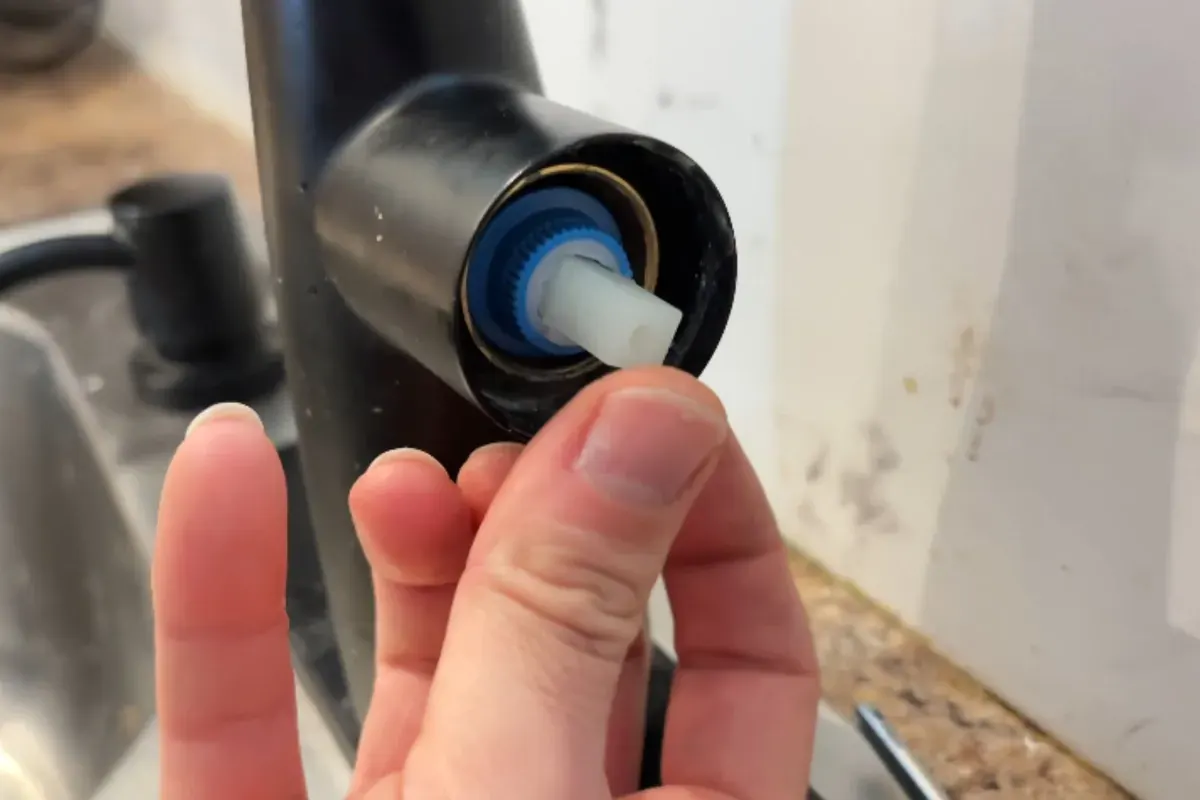
A cartridge faucet slides or rotates a sealed insert that controls both flow and temperature. Water leaking from the spout in every position, or hot and cold mixing when the handle is off, usually means the cartridge or its seals are worn. Cartridges differ by brand and size, so take the old one with you when you buy a match.
A dripping spout versus a leaking handle
A drip from the spout points at the washer, seat or cartridge. Water around the base of a handle points at a stem packing nut or an O-ring. Knowing which saves you from replacing parts you did not need to touch.
Step by step: shut off, open up and replace the part
You need a screwdriver, an adjustable wrench, a cartridge puller if yours calls for one, plain plumber's grease and a towel in the tub to protect the finish.
Shut off the water
Look for a pair of valves in an access panel on the far side of the wall or in the basement or utility room below the tub. If there are none, close the main valve and open a faucet at the lowest point to drain the line.
Plug the drain
A rag in the tub drain keeps small screws from vanishing. Open the tub faucet to confirm the water is truly off and the pressure is gone.
Remove the handle and trim
Pry off the decorative cap, remove the screw behind it, and slide off the handle and escutcheon plate.
Pull the stem or cartridge
On a compression faucet unscrew the stem with a wrench. On a cartridge model remove the retaining clip or nut, then pull the cartridge straight out, using the correct puller if it sticks.
Replace the worn parts
Swap the washer and screw, check the brass seat for scoring, or fit the new cartridge in the same orientation as the old one. Coat O-rings lightly with plumber's grease.
Reassemble and test
Put everything back, open the shutoffs slowly, and run the faucet hot and cold. Look for a drip for several minutes before you call it done.
If the handle will not budge
A stem or cartridge that has welded itself in place by mineral buildup can snap when forced. Soak it with a household vinegar-soaked rag for an hour, then try again. If it still will not move, stop and call, because a broken stem inside a tiled wall is a bigger job than the drip you started with.
Repairs and permits under the Massachusetts plumbing code
The Massachusetts Uniform State Plumbing Code (248 CMR) requires a permit for most plumbing alterations and replacements, with exemptions that include repairing a leak in a faucet or valve. That means swapping a washer or a cartridge in your own tub faucet does not call for a permit.
Replacing the valve body inside the wall, moving the fixture or adding a new shutoff is different, and a licensed plumber must pull a permit for that work. Ask the Easton building department which jobs it wants a permit for, and verify any plumber's license with the state Board of State Examiners of Plumbers and Gas Fitters.
Source type: Massachusetts Uniform State Plumbing Code, 248 CMR 3.05, Board of State Examiners of Plumbers and Gas Fitters
Before you start the repair
A little prep prevents most second trips to the hardware store. Work through the list below with the tub dry and the lights on.
Tub faucet repair checklist
- Identify the faucet type from the table above
- Locate the shutoffs and confirm they close fully
- Take a photo of the handle and trim before disassembly
- Buy the matching washer, seat or cartridge using the old part as a guide
- Lay a towel over the tub finish and plug the drain
- Set the part aside in order so reassembly goes back the same way
- Keep a flashlight handy for checking behind the wall access panel
- Plan time to test for a drip after reassembly
If the shutoffs are missing or will not close, treat that as the real project. Installing a fixture stop on the tub supply makes every later repair simpler.
What Easton homes tend to hide behind the tile
Bathrooms in older Easton houses often have tubs with compression valves that have been in the wall for decades. Supply lines may be galvanized or copper, and corroded fittings can leak or shear when disturbed. Newer homes usually have single-lever cartridge valves, which are easier to service but need exactly the right replacement.
The Easton Water Division draws groundwater and publishes an annual water quality report. If you see white scale on the fixtures, check that report or test your tap before blaming the faucet, because mineral buildup shortens the life of washers and cartridges. A deposit that locks the handle in place is also the usual reason a simple repair turns into a plumber's visit.
When to call a plumber, and what affects the cost
Call when the water will not shut off, when you see a stain on the ceiling below the bathroom, when the valve is behind tile with no access, or when the repair fails after one try. Water leaking inside a wall is the worst case, and leak detection can find it before the damage spreads. For the faucet itself, our faucet repair service covers tub and shower valves.
Cost depends on the valve type, whether parts are still made, access to the back of the wall, and whether the stem or cartridge is seized. Time of day matters as well. A plumber should explain what is wrong and give a clear price before starting work, and you decide whether to go ahead.
Serving Easton and the towns around it
Our dispatch line covers Easton, plus nearby towns such as Norton and Sharon. If a stuck valve starts spraying at night, call the 24/7 line and shut the main valve while you wait.
Does this repair need a permit
Under 248 CMR 3.05, repairing a leak in a faucet or valve is exempt from permits, according to the state plumbing code. Replacing the valve body inside the wall is a different job, so ask first.
Tub faucet questions from Easton homeowners
A steady drip adds up over a month, and it also stains the tub finish. A small leak is worth fixing early even if it never shows up as a jump on one bill.
That is a worn diverter gasket in the spout or the diverter valve. It is usually a quick part swap or a new spout.
Check your lease first. Many landlords want to handle valve repairs, and anything inside the wall should go through them.
It depends on water quality and use. Mineral buildup and heavy use wear seals sooner, and some last many years.
No. The leak is at the faucet, so close the tub shutoffs or the main valve. Turn the heater off only if the water supply to it is cut.
If the trim is dated or the valve is badly corroded, replacement may make sense. A plain washer or cartridge swap is the cheaper fix when the valve itself is sound.