
Faucet will not shut off: what to do first
Start under the sink. Each faucet usually has two small stop valves, one for hot and one for cold, and turning them clockwise should end the flow. Tub and shower faucets rarely have local stops, so the next valve is the main water shutoff, usually near where the line enters the basement.
If the stop valve itself will not close, or drips from its stem, that is the problem we are called for. These small valves seize or corrode, and forcing them can snap the stem. Close the main valve instead, open the lowest faucet to drain the lines, and call.
Which part has failed
Most faucet repairs come down to one of four internal designs. Knowing which one you own helps you describe the problem on the phone.
Compression faucets
Separate hot and cold handles that you tighten down. A rubber washer wears out and the drip starts. These are common in older homes.
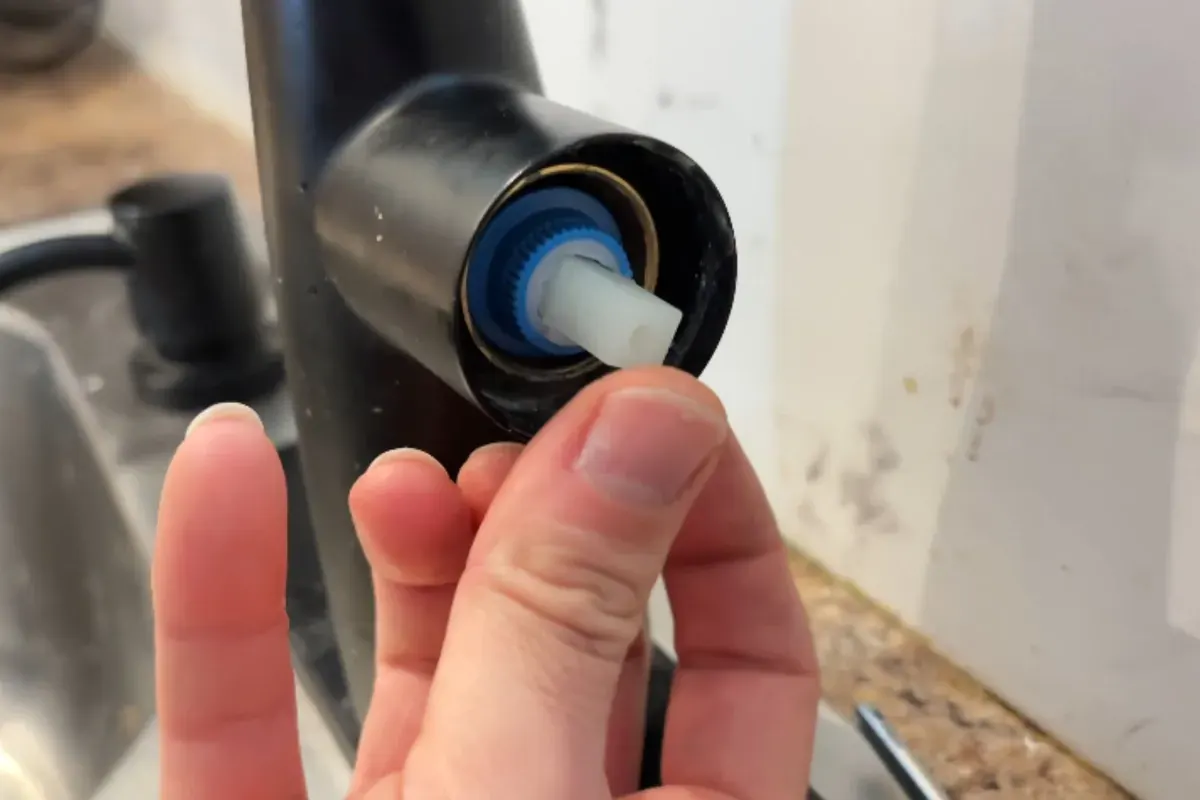
Cartridge faucets
A single or double handle moves a cylinder inside the body. When its seals wear, the faucet drips at the spout or leaks around the handle. Replacing the cartridge, matched to the brand, fixes it.
Ball faucets
A single lever sits on a slotted ball with rubber seats and springs. Many parts means many places to leak, so the usual fix is a rebuild kit.
Ceramic disc faucets
Two ceramic plates slide against each other. They last the longest, but grit or hard buildup can scratch the discs and cause a drip.
If your faucet is more than 15 years old and the finish is pitted, a new one often costs less in the long run than a third repair.
Faucet problem, cause and repair
| Symptom | Probable cause | Typical repair |
|---|---|---|
| Steady drip from the spout | Worn washer, seat or cartridge | Replace the part, clean the seat |
| Leak at the handle base | Worn O-ring or cartridge seal | Replace O-rings or the cartridge |
| Low or weak flow | Clogged aerator or cartridge | Clean or replace the aerator, flush the lines |
| Water under the sink | Failed supply line or stop valve | Replace the line or valve |
| Handle stiff or loose | Mineral buildup or loose set screw | Clean and reassemble, or replace |
| Wobbly faucet on the sink | Loose mounting nut | Tighten from below |
Bathtub faucet leaks and the shower diverter
A tub spout that drips after the shower is running is often a worn diverter, the small piece that sends water up to the showerhead. If water pours from both the spout and the showerhead at once, the diverter is failing. A pull-up diverter on the spout can be swapped without opening the wall.
A leak from the handle trim or a drip from the tub spout when everything is off usually points to a worn cartridge or valve seat inside the wall. That repair needs the plumber to reach the valve body, and sometimes an access panel on the other side of the wall is the easiest path. Check the ceiling or wall below for stains, since a leak inside the wall can wet the room underneath.
Faucet leaking and the valve will not close
Call the 24/7 line. Tell the dispatcher which faucet and whether you can still stop the flow.
What we see in Easton kitchens and baths
Homes near the village centers often carry old stop valves that were last turned decades ago. They stick, then fail when someone finally tries them. Newer houses have quarter-turn valves that hold up better, but the plastic supply lines behind a vanity can still split.
The Easton Water Division draws from groundwater wells and publishes an annual water quality report. If your aerators clog with grit or white buildup quickly, read that report or have the tap water tested. We do not assume a specific hardness for your address, because it has not been verified for every street.
Frozen pipes are the cold-weather risk. A faucet on an exterior wall can freeze and split a supply line in a December cold snap. If a faucet runs weak in freezing weather, call before the line thaws and bursts, and see burst pipe repair if water is already moving.
What the visit looks like
Shut off and inspect
The plumber closes the supply and identifies the faucet type and the failed part.
Choose repair or replace
A cartridge or washer can be changed on site. A corroded or damaged faucet may be better replaced.
Fix the supply side
Stop valves and flexible supply lines are tested and replaced if they leak or stick.
Test every mode
Hot, cold, spray and diverter are run to confirm no drip or cross-flow.
Hand it back
You learn where your shutoffs are and how to keep them from seizing.
What moves the cost of faucet repair
You get a clear price before work starts. The main variables are below.
What moves the price
If a leak has stained a ceiling or cabinet, photograph it and ask your insurer what it covers.
☎ Want your real number? Call (508) 389-4045Permits and water waste
Under 248 CMR 3.05, repairing a leak in a faucet or valve does not need a permit, according to the state plumbing code. EPA WaterSense guidelines estimate that a faucet dripping once per second wastes about 3,000 gallons a year, which is a good reason not to wait.
Faucet repair questions from Easton homeowners
Yes. The line is answered all day and night, weekends and holidays included. Tell the dispatcher where the water is coming from.
Often yes, if the body is sound. A cartridge or washer is a small repair. A pitted, corroded or leaking body is better replaced.
No. The state plumbing code exempts repairing a leak in a faucet or valve from the permit requirement. Replacing supply lines or relocating fixtures is a different matter, so ask about the job.
Most often it is the diverter or a worn cartridge. If water keeps running at the spout with the shower on, the diverter is the likely culprit.
Watch for a wet cabinet floor, a rising water bill or a stained ceiling below. Our leak detection page covers the tools used for finding leaks in walls.