
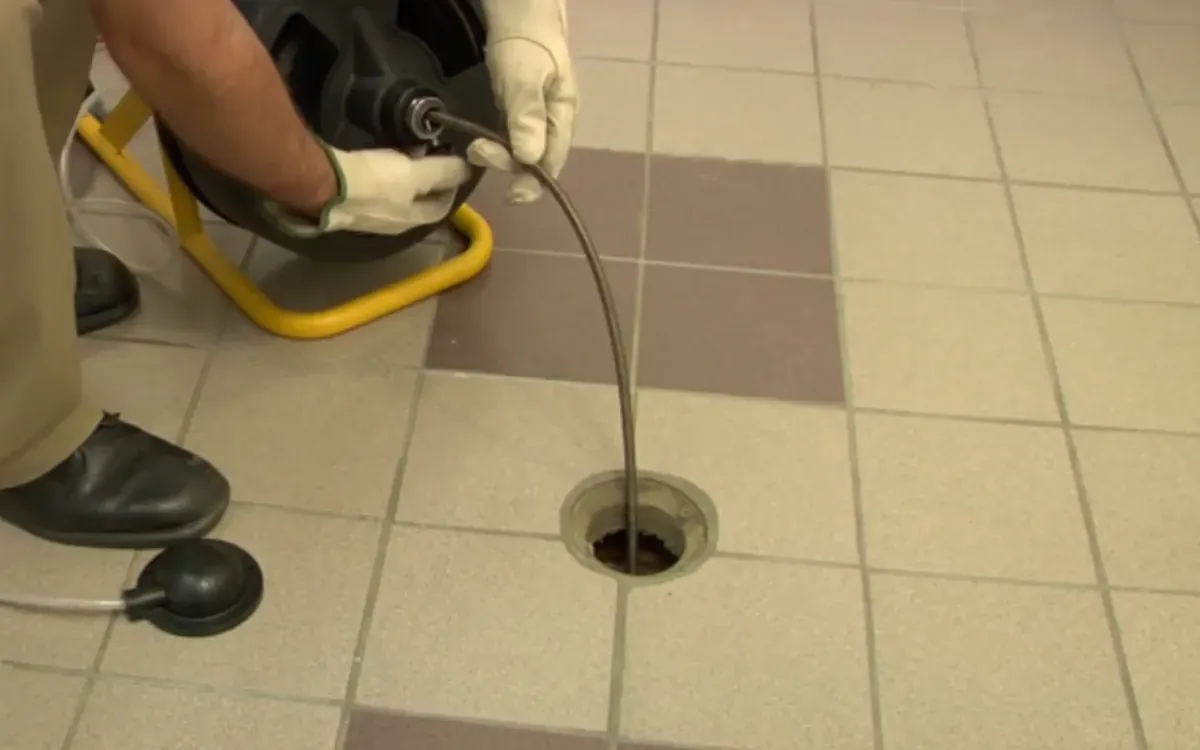
The three-tool method for a clogged drain
Try the plunger first, then a hand snake, then clean the trap. That order goes from the least invasive to the most, and it clears the large majority of sink, tub and shower clogs without anything poured down the pipe. If a toilet is the problem, a flange plunger or closet auger does the same job.
Stop if you see water coming up in other fixtures, or if the same drain clogs again within a few days. Those signs point to the main drain, and the next step is a plumber. Everything below is for a single fixture that is slow or stopped.
Plunger technique that actually works
Most failed plunging comes from a poor seal.
Block the overflow
Press a wet rag into the overflow hole on a sink or tub so pressure goes down the drain, not out of the hole.
Cover the plunger cup
Use enough water to cover the rubber cup. Water transmits force, air does not.
Seat and push gently
Set the cup flat over the drain, push down slowly to expel air, then pull up sharply.
Repeat in bursts
Work for 15 to 20 strokes without breaking the seal. Watch for the water level to drop.
Flush with hot tap water
Run the hot tap for a minute to carry loosened material through. Very hot water can soften PVC joints, so use tap hot, not boiling.
Using a hand snake without harming the pipe
A small hand-crank drain snake, sometimes called a drain auger, is sold at any hardware store and reaches well past the trap. Feed the cable into the drain until you feel resistance, tighten the thumbscrew, and crank while pushing gently. The point is to hook or break up the clog, then pull it back out.
Hair clogs come out as a gray, slimy mat, and that is a good sign. If the cable stops hard against something that will not move, do not force it. Cast iron and old galvanized pipe in older Easton homes can be brittle at the joints, and a stuck cable can do more harm than the clog.
Which tool for which clog
| Tool | Best for | Limits |
|---|---|---|
| Cup plunger | Sink and tub with standing water | Needs a seal and cannot clear deep clogs |
| Flange plunger | Toilets | Not for sinks, the shape does not seat |
| Hand drain snake | Hair and soap in tubs, showers and branch lines | Short reach, not for the main line |
| Trap cleaning by hand | Kitchen and bathroom sinks with slow flow | Needs a bucket and a minute to reassemble correctly |
| Closet auger | Toilet clogs behind the bowl | Only for toilets |
| Professional hydro jetting | Grease, scale and root-fringed lines | A service call, not a home tool |
Cleaning the trap under a sink
The curved pipe under a sink, the P-trap, holds a plug of water that blocks sewer gas. It also catches the heavy debris that causes kitchen clogs. Put a bucket underneath, loosen the slip nuts by hand, pull the trap off, and empty it. You will usually find a gray mass of grease and food. Rinse the trap, check that the washers are still seated and thread the nuts back on.
Run water and look for drips at each joint before you close up the cabinet. If a nut is cross-threaded or the washer has worn flat, replace it. This small job also tells you whether the clog was in the trap or farther down. If the trap is clean and water still stands, the clog is deeper in the drain.
Mechanical tools versus pouring something down the drain
Chemical openers are the usual shortcut. Here is why the tools above are the safer first move.
Mechanical methods
- Remove the clog instead of dissolving part of it
- Safe on every pipe material when used gently
- Nothing left in the pipe for the next person
- Work on septic systems because nothing harms the tank
Chemical openers
- Can sit in a standing pipe and burn skin or eyes
- May damage old metal pipes and plastic fittings
- Often only bore a hole through the clog
- Can harm the bacteria a septic tank relies on
If a chemical cleaner has already been used, tell the plumber. It changes how they handle the line.
Septic homes in Easton: what the state says
Parts of Easton run on private septic systems, and Massachusetts regulates them under Title 5. MassDEP advises homeowners to pump the tank at least every three years and to have the system inspected when a home is bought or sold. Those are the state's own numbers, and they are worth keeping in mind when a drain slows down.
On septic, a slow drain can mean a full tank or a failing leach field rather than a hair clog, so ask before you reach for anything strong. If you are unsure whether your Easton address is on town sewer or septic, the Easton building department can tell you.
Source type: MassDEP, Septic Systems (Title 5), Mass.gov
Clog-clearing checklist
Run through this before you decide a drain needs a professional.
Before and after you clear a drain
- Check whether other fixtures are slow too. If yes, stop and call.
- Remove the stopper and pull out visible hair by hand with gloves.
- Plunge with a good seal and the overflow blocked.
- Feed a hand snake gently and stop if the cable binds hard.
- Clean the P-trap over a bucket if the sink still drains slowly.
- Run hot tap water for a minute to confirm flow.
- Add a drain screen to the tub or sink to stop the next clog.
What to skip, and when it is time to call
Do not pour grease into the drain, and do not mix cleaners. A kitchen line that clogs every few weeks needs a plumber, because grease narrows the pipe until even a clean trap does not help. Wipes sold as flushable, cotton swabs and feminine products do not break down the way paper does, and they are a common reason for repeat toilet clogs.
If the plunger and the snake do not work, or several drains are slow together, call for drain cleaning. A camera and a cable can find what a hand tool cannot. We cover Norton, Mansfield and the rest of the area around Easton with a clear price before work starts.
Septic guidance behind these tips
According to MassDEP's Title 5 guidance, a septic tank should be pumped at least every three years, and harsh drain chemicals do not belong in it. Mechanical methods are the safer default.
Clog questions from Easton homeowners
Give it two or three rounds of 15 to 20 strokes. If the water level does not drop at all, the clog is beyond a plunger's reach and a snake or a plumber is next.
Yes if you are gentle. Do not force a cable that binds, because cast iron and galvanized pipe can be fragile at the joints.
It can pull out a clog close to the opening. Set it to wet mode, seal the hose against the drain and stop if it pulls from a long way down, which usually means the line is blocked past the trap.
That usually means a partial blockage in the main line, not a branch clog. Tools for a single fixture will not fix it.
Pull the stopper and clean the hair from it by hand, then run a hand snake a few feet. Most tub slowdowns are hair wrapped around the stopper or just below it.
Clearing a stoppage is exempt from the Massachusetts plumbing permit rule. Replacing or altering pipes is not, so ask the Easton building department before anything beyond clearing.