
The fastest way to know if you have a leak
Shut off every faucet and appliance that uses water, then look at your water meter. If the small leak indicator is spinning or the dial is creeping forward, water is going somewhere you are not using it. That single check takes about two minutes and answers the question for most houses.
If the meter is still, you probably do not have a leak between the street and your fixtures. If it moves, the next job is narrowing down where. The rest of this guide walks through the meter test properly, a dye test for toilets, the signs worth trusting, and the point where a plumber with the right tools saves you time.
Run the meter test the right way
The meter test works because a meter counts only water that passes through it. Do it when the house is quiet, such as first thing in the morning before anyone showers.
Stop all water use
Turn off taps, washing machines and dishwashers. Check that the ice maker is not mid-cycle and that no one flushes a toilet during the test.
Find and read the meter
Most meters sit in the basement or a utility area near where the service line enters the house. Note the numbers on the register and the position of the small leak indicator.
Wait, then read again
Leave the house alone for at least two hours. Do not use any water at all, then compare the reading. EPA guidance says any change suggests a leak.
Test the main shutoff
Close the main valve and watch the meter again. If it stops, the leak is inside the house. If it still moves, the leak is on the service line before the valve.
Write the numbers down instead of trusting memory. Take a phone photo of the register at the start and the end, so you have proof if you later talk to the town about a high bill.
What the meter is telling you
| What you see | Likely meaning | Next step |
|---|---|---|
| Meter still after two hours | No steady leak in the lines | Check for intermittent leaks like a toilet that runs now and then |
| Meter moves, stops when the main valve closes | Leak inside the house, in a fixture or pipe | Do the toilet dye test, then check under sinks and at the water heater |
| Meter moves with the main valve closed | Leak on the service line outside the shutoff | Look for soft, wet ground near the line, then call for water line repair |
| Meter still, but the bill climbed | Seasonal use, a leak that comes and goes, or a meter reading issue | Compare against earlier bills and ask the water office to recheck the reading |
Easton's water comes from town wells
Easton Water Division supplies the town from six groundwater wells, according to the state's source water assessment filed with MassDEP. The division adds calcium hydroxide for corrosion control and sodium hypochlorite as a disinfectant before the water reaches your pipes.
That matters for leak hunting in two ways. A town system means there is a meter reading and a billing history you can compare month to month. It also means the water office can tell you how your meter is read and whether a reading looks unusual, so call the Water Division at the number on your bill before you pay for a repair based on the bill alone.
Source type: MassDEP Source Water Assessment and Protection report for Easton Water Division
Test every toilet with dye
Toilets are the most common hidden leak in a house, because the water slips silently from the tank into the bowl. The meter may creep so slowly that you barely notice.
Add color to the tank
Lift the tank lid and drop in a dye tablet or a few drops of dark food coloring. Do not flush.
Wait without flushing
Give it 10 to 20 minutes. Mass.gov guidance for Fix-A-Leak Week suggests 15 to 20.
Check the bowl
If color shows in the bowl, the flapper is not sealing. Flush right away so the dye does not stain the tank.
Replace the worn part
A flapper is the usual culprit. If the fill valve hisses or the water level sits at the overflow tube, that is a second sign. Persistent trouble belongs with toilet repair.
Signs of a hidden leak you can see and hear
Not every leak shows on a meter test you remember to run. The house usually gives hints first.
Wet or stained surfaces
Brown rings on a ceiling, a bubbled patch of paint or a cabinet floor that feels soft often mark a supply or drain leak above or behind it. Check after the dishwasher or shower runs, because some leaks only show under pressure or flow.
Sounds and smells
A hiss or trickle in a quiet house when nothing is running is worth tracing. A musty smell in a basement corner or closet that does not clear with a dehumidifier can point to moisture inside a wall.
Pressure and bills
A bill that rises with no change in habits is the classic sign. Low pressure at one fixture while the others are fine suggests a problem on that branch rather than at the street.
Walk-through checklist before you call
Use this list after a moving meter and before you pick up the phone. It rules out the easy causes and gives the plumber better information.
Ten minutes, one pass through the house
- Write down the meter reading and the leak indicator position
- Dye test every toilet, including the one nobody uses
- Look under each bathroom and kitchen sink for damp cabinet floors
- Check the washing machine hoses and the dishwasher supply line
- Feel the area around the water heater and the relief valve pipe
- Check outdoor spigots and hose connections, then shut them off for winter
- Look at the sump pit or floor drain for water that should not be there
- Scan ceilings below bathrooms for stains
- Walk the yard near the line to the house for soft or unusually green ground
- Note the date and time of anything you find and snap a photo
If a drip turns up and you can fix it by replacing a hose or a washer, do that. If the source stays hidden, stop guessing.
Leaks that hide where you cannot look
Slab leaks, leaks inside a wall, and breaks in a buried service line do not show up on a shelf check. Easton's older village houses may have galvanized or copper lines that corrode from the inside, and a pinhole in a wall can run for months before a stain appears. Newer subdivisions have PEX and plastic fittings, which have their own weak spots at connections.
Winter adds another cause. Freeze and thaw cycles can crack a pipe in an exterior wall or an unheated crawlspace, and the leak may only show when the pipe warms up again. If you see water after a cold snap, shut the main valve first and then call. A broken pipe is a different job from a slow drip, and burst pipe repair starts with stopping the flow.
Do it yourself or call a plumber
You can do the first round yourself. Know where that stops.
Safe to try yourself
- Meter test and main valve test
- Dye test in every toilet
- Replacing a flapper or a washer
- Tightening a supply line by hand
- Checking under sinks and around appliances
Call a licensed plumber
- Meter moves with the main valve closed
- Wet drywall, ceiling stains or a musty wall
- Warm spots on the floor or a hiss from a wall
- Pressure loss with no visible cause
- Any leak near the electrical panel or a gas appliance
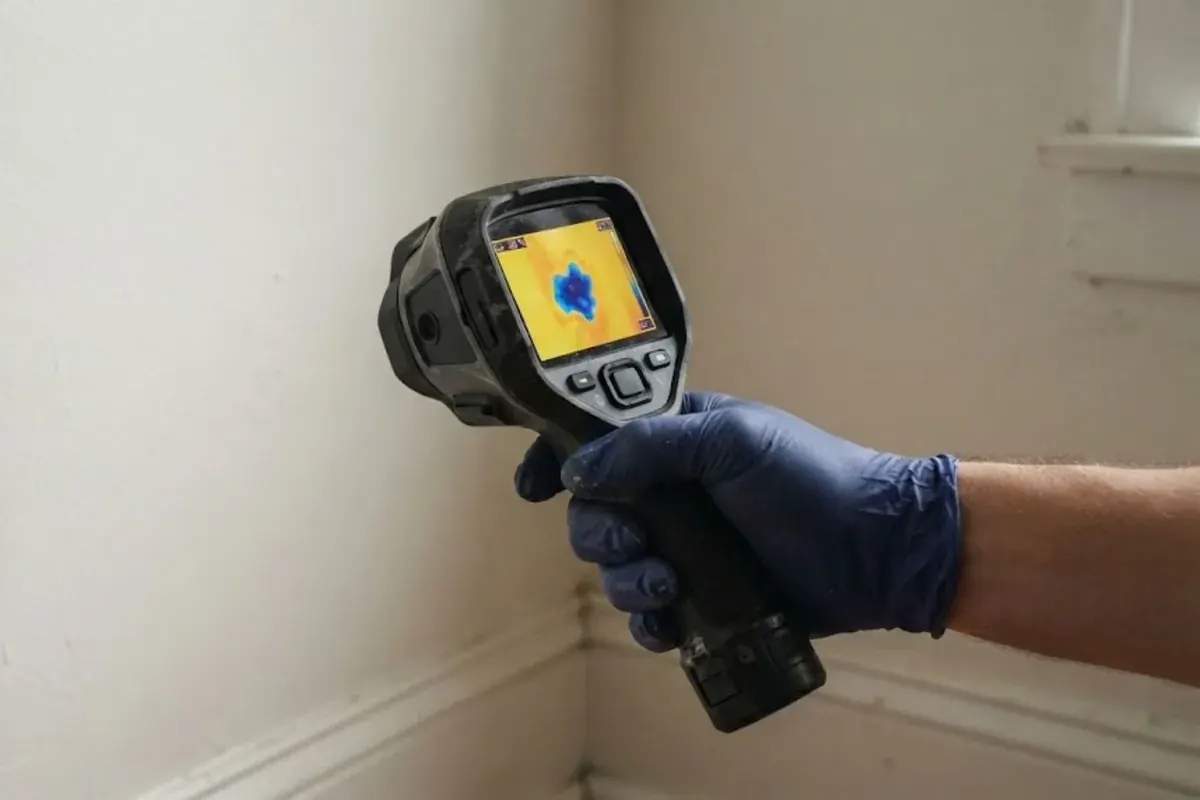
Plumbers use acoustic listening gear, thermal imaging and pressure tests to find leaks without tearing open walls. That is the point of professional leak detection: locating the exact spot so only a small area is opened.
After you find it
Shut off the water to the fixture or the main valve, and document the damage before you clean up. Photos and a note of the meter reading help if you file an insurance claim. Dry wet materials quickly, because mold can start within a couple of days on damp drywall.
Massachusetts requires a permit before plumbing is installed, altered or replaced, though repairing a leak in a faucet or valve is exempt. Anything larger than a simple fixture fix generally needs a licensed plumber, and you can check any plumber's license with the state Board of State Examiners of Plumbers and Gas Fitters. The same meter and dye tests work just as well for neighbors in Mansfield or Norton, who should check with their own water supplier about meter details.
Leak questions from Easton homeowners
Most are inside near where the service line comes in, often in a basement or utility space. If you cannot find it, check your latest bill for a meter number and call the Easton Water Division to ask where it is typically set.
Call the number on your bill and ask them to recheck the reading and share your usage history. Do your own meter and dye tests first so you can give them clear information.
No bill, but you may notice the pump running more often. Listen for a well pump that cycles when nothing is in use, and call a plumber if it does.
Yes. EPA says a faucet dripping once per second can waste more than 3,000 gallons a year, and the repair is usually small.
Often the flapper or fill valve is the fix. If the dye test shows color and a new part does not cure it, a plumber can check the seat and the tank.
The line is open nights, weekends and holidays. If water is actively flowing, close the main valve before you call.