
Seven parts, two jobs
Every bathroom sink does two jobs. It delivers water through the faucet, and it carries used water away through the drain. The parts that do the first job are the supply stops, the supply lines, the faucet body and the aerator. The parts that do the second are the pop-up assembly, the tailpiece, the P-trap and the wall stub.
Knowing which is which tells you what to shut off before you touch anything and what to do about a leak. A drip from a supply line is a pressure leak, so you close a valve. A drip from the trap is a gravity leak, so you only need a bucket.
The parts at a glance
| Part | What it does | What usually fails |
|---|---|---|
| Stop valve (angle stop) | Shuts water to one fixture | Stiff handle, drip at the stem, stuck when closed |
| Supply line | Braided or solid line from stop to faucet | Worn nut, kinked line, slow drip at the connection |
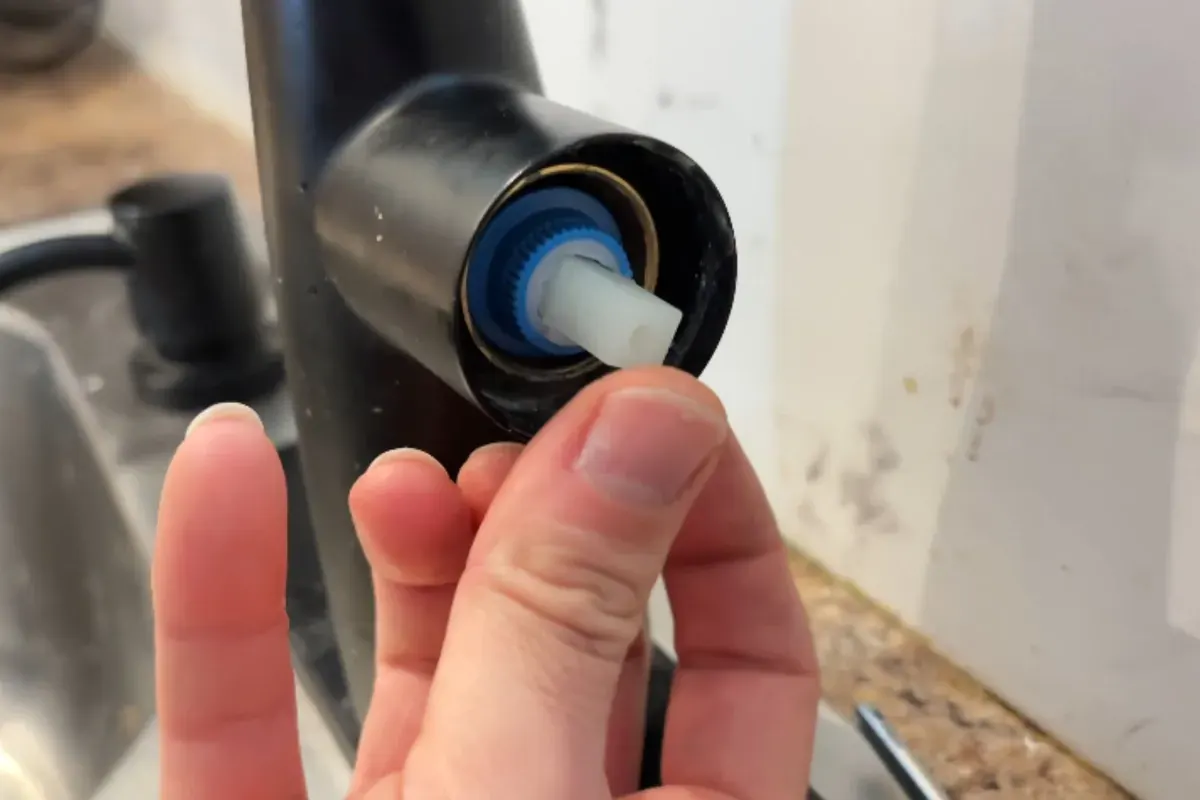
| Faucet body and cartridge | Mixes and controls flow | Dripping spout, hard handle, uneven temperature |
| Aerator | Adds air and filters the stream | Mineral buildup, reduced flow, spray at odd angles |
| Pop-up assembly | Stopper and linkage that seals the basin | Stopper does not seal, rod loose, leak at the pivot |
| Tailpiece and P-trap | Curved trap that holds a water seal | Loose slip nut, gasket wear, hair and soap buildup |
| Wall stub and escutcheon | Where the trap meets the wall drain | Sewer smell if the seal or trap dries out |
Start at the wall: stop valves and supply lines
The two small valves on the wall or floor under the sink are stop valves, usually one for hot and one for cold. Turn each clockwise until it stops and the faucet runs dry. If a valve will not turn or drips at the stem when you try, do not force it. It may need replacing before you can work safely, and that can take a plumber.
From each stop, a flexible supply line runs to the faucet. Braided stainless lines resist kinking, and plastic or rubber ones age faster. Replace a line whenever it looks cracked, bulged, rusty at the nut or soft. Check each connection by wiping it dry with a paper towel and watching for a bead of water after ten minutes.
Hand tight is not the same as cranked
Supply nuts seat against a washer or cone, and extra force can crush it. Snug them by hand, then add a small turn with a wrench if it still weeps.
Easton's treated water and your faucet parts
Easton Water Division draws from six groundwater wells and adds calcium hydroxide to control corrosion, along with sodium hypochlorite as a disinfectant, according to the MassDEP source water assessment. Treatment keeps water from attacking pipes, but minerals and sediment can still collect in small openings such as an aerator screen or a cartridge.
That is why aerators clog first. If your stream sprays sideways or has weakened, unscrew the aerator and look at the screen before you assume the faucet is failing. For water quality questions that go beyond plumbing, the division's annual consumer confidence report is the source to read.
Source type: MassDEP Source Water Assessment and Protection report for Easton Water Division
What fails first, and why
The aerator screen
It sits at the tip of the spout and filters grit. When it clogs, flow weakens or shoots off to one side. Soak it in vinegar, rinse it, and brush the screen, or replace it if the threads are damaged.
The P-trap slip nut
Hair, toothpaste and soap collect in the trap bend and push on the joint. A slow drip at the nut can mean a worn washer or a nut that has loosened over time. A bucket under the trap and a gentle quarter turn often fixes it.
The pop-up linkage
The rod behind the faucet pivots into the drain. If the stopper will not hold water or will not lift, the pivot nut or the lift rod is usually the issue, not the drain itself.
How to swap a leaking P-trap
This is a manageable job for a patient homeowner with a bucket and a flashlight.
Clear the cabinet
Remove everything from under the sink and lay down a towel and a bucket.
Loosen the slip nuts
Unscrew the nut at the tailpiece and at the wall stub by hand. Use pliers only if they are stuck.
Check the parts
Look at the washers for flattened or cracked edges. Replace the gaskets or the whole trap if the pipe is pitted.
Reassemble in line
Fit the trap so water flows straight down. A twisted trap collects hair and leaks.
Run water and look
Fill the basin, pull the stopper and watch the joints for ten minutes. A dry paper towel held under each nut shows weeping.
The curved trap holds a plug of water that blocks sewer gas from entering the room. If you remove the trap, plan to leave it off for minutes, not days.
Before you start any sink repair
A few minutes of prep avoids most of the common mistakes.
Prep list for under-sink work
- Close both stop valves and open the faucet to drain the lines
- Put a bucket and towels under the trap
- Take a photo of the layout before you disassemble anything
- Match old parts to new ones at the store, including thread size
- Wrap plumber's tape on tapered threads only, not on compression nuts
- Hand tighten first, then add a small turn with a wrench
- Turn the water on slowly and check each joint dry-to-the-touch
- Test the pop-up stopper and the overflow slot for leaks
- Keep the old parts until the sink has run for a day
Parts you replace and jobs to hand off
Most sink parts are low-risk. A few are not.
Reasonable to do yourself
- Cleaning or replacing an aerator
- Replacing a braided supply line
- Swapping a P-trap kit or its washers
- Replacing a pop-up stopper or lift rod
- Hand tightening a weeping slip nut
Better with a licensed plumber
- A stop valve that will not close
- Corroded or galvanized pipe behind the wall
- A faucet body that drips from the base
- A drain that clogs again right after clearing
- Anything that changes the pipe layout
A faucet that still drips after new washers or a new cartridge usually needs a closer look. That is what faucet repair covers, from worn seats to a body that needs replacement. A clogged trap that keeps coming back may be a sign of a deeper line problem, and drain cleaning is the next step.
Older houses, newer houses, different failures
In an older Easton house, you may find chrome-plated brass traps, galvanized supply pipe and valves that have not been turned in decades. These seize easily, so expect resistance and be ready to stop. In newer builds, plastic traps and PEX connections are lighter and easier to handle, but a plastic slip nut can crack if overtightened.
Massachusetts requires a permit for plumbing work, but repairing a leak in a faucet or valve is exempt under 248 CMR. If you are rerouting a drain, changing a vanity setup or opening a wall, that is permitted work and belongs to a licensed plumber. You can check any plumber's license with the state Board of State Examiners of Plumbers and Gas Fitters, and ask the Easton building department what applies to your project.
Neighbors, bigger problems
Homes in Stoughton and Sharon have the same under-sink parts, and the same repair rules apply, though each town has its own building department. If a repair turns into something larger, a plumber who works across the region can handle it with the same checklist above.
Sink part questions from Easton homeowners
Check whether the trap has dried out from a guest bath that is rarely used. Run water for a minute. If the smell persists, the trap seal may be failing or the vent may be blocked, and a plumber should look.
Yes for most chrome and nickel finishes. Check your faucet maker's care notes first, since some finishes should not sit in acid for long.
Many pop-up flanges seal with putty or a gasket, depending on the drain. Read the instructions that came with the part.
Inspect them yearly and replace any that look worn. Plan to replace braided lines after they have been in place for around a decade, or sooner if they bulge.
Not always. A slow drip from a slip nut is a small job. Water spraying or running down the wall is an emergency, so close the stop valve or the main and call.