
Quick answer: how it works
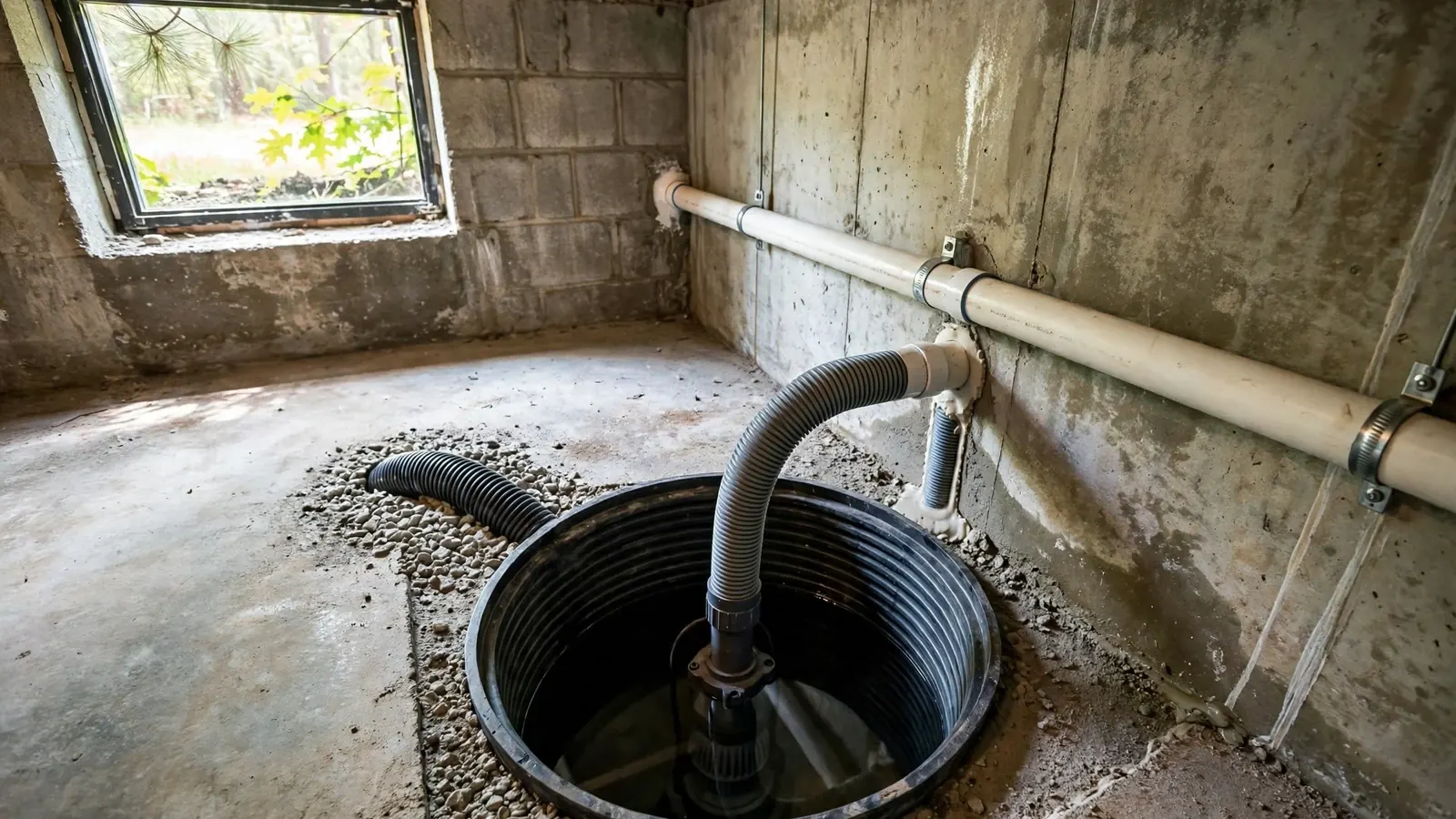
A water powered backup uses the same venturi principle as a garden aspirator. City water flows through a nozzle into the sump discharge line and creates suction that pulls sump water out of the pit. The two streams leave together through the discharge pipe.
It has no motor, no battery and no electrical parts. That is its appeal during a storm outage, and also its biggest limitation, since it works only as long as the house has water pressure.
Water powered versus battery backup
Many plumbers prefer battery backups for most homes, and the reasons are practical.
Water powered backup
- No batteries to replace, no charger to fail.
- Runs as long as water pressure holds.
- Uses fresh water to move sump water, so the bill rises while it runs.
- Needs new supply piping, a backflow preventer and testing.
- Does nothing if pressure is lost.
Battery backup
- Self-contained with its own pump.
- Moves more water per minute in most models.
- Batteries wear out and need testing and replacement.
- Run time is limited by battery capacity.
- Simpler plumbing and no extra water use.
For a home on a private well, the water powered option is weaker still, because the well pump needs electricity to supply pressure.
Why it depends on municipal pressure
The jet is only as strong as the water behind it. A low-pressure line or a water main shut for repairs means a weak or useless backup. If a storm outage also affects the water system, the backup weakens just when you need it.
One municipal guide on these pumps says the system needs pressurized fresh water service and uses about two gallons of supply water for each gallon of sump water moved. Ask yourself whether a long storm could cost you both power and water pressure. If the answer is yes, a battery system is the safer pick.
Easton Water Division and private wells
The Easton Water Division supplies town water from groundwater wells. The state's source water assessment for the system lists six wells (GP Wells 1 through 6) grouped into three protection areas, and notes an aquifer protection bylaw. Homes on town water have the pressure source a water powered backup needs. Homes on a private well are different: the household well pump is electric, so a power outage that stops the primary sump pump also stops the water pressure.
Ask the Easton Water Division whether it has rules for devices that connect to your plumbing and whether a backflow device on a new line needs to be reported. Its annual water quality report and the town's water pages are the places to start.
Source type: MassDEP source water assessment for the Easton Water Division (SWAP report)
Backflow protection and local code
The sump pit holds dirty water. The backup connects that pit to the clean supply, so a failure could send sump water back into drinking water. That is why a reduced pressure zone (RPZ) backflow preventer is used with these pumps, and why the device needs periodic testing by a certified tester.
Massachusetts cross-connection rules classify device type by hazard. The state's cross-connection manual describes testing reduced pressure devices registered with a water supplier every six months, by a MassDEP-certified tester. It does not mention sump pumps specifically, so confirm what applies to a residential install with the Easton Water Division and the local plumbing inspector.
What a licensed plumber does to install one
Homeowners should not attempt this as a weekend project. The installation touches the water supply and a safety device.
Assess the pit and discharge
The plumber checks the pit size, float placement and discharge line, then confirms the discharge does not freeze or flood a neighbor.
Check pressure and supply
A pressure test confirms the home has enough water pressure at the sump location for the unit to work.
Run a supply line
New piping brings water to the unit from a tee on the supply, with a shutoff valve where it can be reached.
Install the backflow preventer
The RPZ device is installed in the supply line to keep sump water out of the clean side.
Mount the unit and connect to discharge
The unit goes above the pit, its inlet reaches the water, and its outlet ties into the discharge line.
Test under load
Fill the pit past the primary float with the primary pump unplugged and watch the backup start, run and shut off.
What the install involves
| Item | What it is | Who handles it |
|---|---|---|
| Backup unit | Venturi style pump with its own float | Plumber installs |
| Supply line and shutoff | Pipe from the house water supply to the pit | Licensed plumber under a permit |
| Backflow preventer | RPZ device protecting the public supply | Plumber installs, certified tester tests |
| Discharge line | Pipe carrying water out of the house | Shared with the primary pump, see sump pump repair |
| Permit | Local plumbing permit for the new piping | Licensed plumber pulls it |
Permits in Massachusetts
In Massachusetts, a permit from the local plumbing inspector is required before plumbing is installed, altered or repaired, and only a licensed plumber can pull it. Fixing a leaky faucet or clearing a stoppage is exempt, but running new supply piping and adding a backflow device is not. Ask the Easton building department about local steps.
You can confirm a plumber's license with the state's online lookup from the Board of State Examiners of Plumbers and Gas Fitters. Be wary of anyone who offers to skip the permit.
Before you choose a backup
Answer these honestly before buying any backup.
Decision checklist
- Am I on town water or a private well?
- Has my water pressure ever dropped during a storm or outage?
- Does my sump pit already cycle often in heavy rain?
- Is my primary pump old enough that replacing it is the real fix?
- Can the discharge run away from the foundation without freezing?
- Do I have a plan to test the backup every few months?
A backup is only as good as the primary pump and the discharge line. Fix those first.
Backflow rules for water-powered pumps
According to MassDEP's cross-connection guidelines, a device connected to the public water supply needs backflow protection. That is the main code issue with a water-powered backup pump.
Water powered sump pump questions for Easton homes
It can, as long as the town water system keeps pressure. It does not need electricity, but a long outage that affects the water supply would weaken it.
It is a poor fit. The well pump runs on electricity, so a power outage cuts the water pressure the backup needs.
Yes, while it runs, since it uses supply water to move sump water. One municipal guide puts it at about two gallons of fresh water per gallon pumped. It only runs when the primary fails, so the cost depends on how often that happens.
Yes. New supply piping and a backflow device need a plumbing permit pulled by a licensed plumber. Ask the Easton building department for local details.
Batteries do not depend on municipal pressure, move more water, and need no new supply piping or backflow testing. They do need maintenance, so test and replace on schedule.
The honest recommendation
A water powered pump can make sense on town water for a home that rarely loses pressure and has a healthy primary pump. For most homes, a battery backup is simpler and does not rely on the municipal system. Either way, the primary pump and the discharge line decide whether you stay dry.
If the pump has already quit, start with sump pump repair and a plumber's diagnosis. The backup question can wait until the pit is working again.