
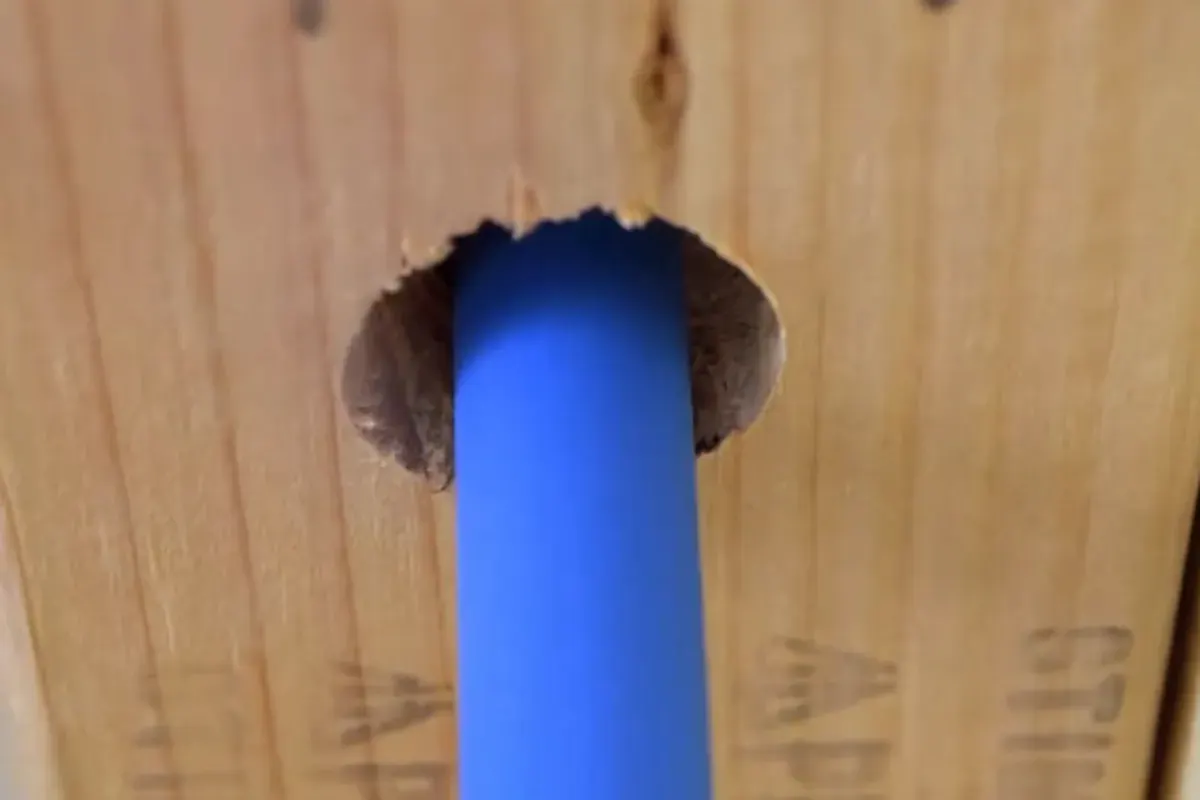
Four pipe materials you may find in an older New England house
Pipe tells you the age of a house better than a deed. Open a basement ceiling or look at the water line near the meter, and you will usually see one of four materials. Each ages differently, and not all of them fail the same way.
Galvanized steel was common in older homes until copper replaced it. It rusts from the inside, so the opening narrows and pressure drops. Copper lasts for decades but can develop pinholes in some water conditions. Polybutylene, a gray plastic used roughly from the late 1970s to the mid 1990s, has a record of failures at fittings. PEX is the flexible plastic used in newer work and retrofits.
How each material behaves
| Material | Typical problem | Usual advice |
|---|---|---|
| Galvanized steel | Internal rust, low pressure, brown water | Replace once pressure or leaks become a pattern |
| Copper | Pinholes, pitting, failed solder joints | Spot repair if isolated, repipe if widespread |
| Polybutylene (gray) | Brittle fittings that can fail without warning | Replace, and ask your insurer about it |
| PEX | Rare problems, mostly from poor installation or UV exposure | Leave in place if installed correctly |
| Lead service line | Unsafe lead in drinking water | See the water supplier before repiping |
Signs your pipes are near the end
Warning signs
- Brown or orange water when you turn on a tap after sitting idle.
- Pressure that fades when two fixtures run at once.
- Pinhole leaks, green stains or damp spots in walls and ceilings.
- Visible rust or flaking on exposed galvanized pipe.
- Repairs that keep reappearing in different places.
- Noisy pipes or a dull taste in the water.
One sign alone is not a verdict. A cluster of them across the house is, and a plumber can confirm it with a pressure test and a look at pipe sections.
Pipes failing again
Call and tell us the age of the house and the pipe material you can see. We will explain your options.
Repipe all of it or just the worst section
Not every house needs a full repipe. If one branch is corroded and the rest is sound, replacing that section may be the sensible move. A plumber should be honest about which, and show you the pipe they are judging.
Mixed systems are another reason to repipe. Many older Easton houses have copper in one wing, galvanized in another and a few plastic repairs between. Joining dissimilar metals invites corrosion at the joint, so a whole-house approach can be simpler than patching again and again.
How a repipe works
The process is the same whether the house is a village Victorian or a ranch.
Survey the system
The plumber traces the pipe runs, checks pressure and finds access points through basement, crawlspace or attic.
Agree the plan
You get a clear price, a scope and a schedule before work starts.
Permit
A licensed plumber pulls the permit with the local plumbing inspector, as the Massachusetts plumbing code requires.
Replace the lines
New supply pipe runs through the open framing, with as few wall cuts as the layout allows.
Test and inspect
The system is pressure tested and the inspector signs off.
Restore access
Small drywall openings are patched or left ready for a drywall contractor.
Permits and the state code
Massachusetts requires a permit from the local plumbing inspector before plumbing is installed, altered, removed, replaced or repaired. Only licensed plumbers can pull it. Repiping is clearly beyond the minor exemptions, which cover repairing a leak in a faucet or valve and clearing a stoppage.
Ask the Easton building department which forms and inspections apply to your project. You can also verify the plumber's license on the state's online lookup. A skipped permit can cause trouble at resale and with insurers.
What a repipe means for an Easton house
Older village homes
Plaster walls and tight chases make access the main challenge. Expect careful planning and patch work.
Postwar capes and ranches
Often copper or galvanized with basement or crawlspace access, which keeps wall cutting down.
Newer subdivisions
Copper or PEX already, so repiping is usually targeted at a single failing line or manifold.
What affects the cost of repiping
We give a clear price before work starts. A repipe depends on these things.
What moves the price
If a leak has already damaged the house, photograph it and ask your insurer what is covered. Some owners also look at generic financing for a large project.
☎ Want your real number? Call (508) 389-4045Permits and code for repiping
Repiping is permitted work, so a licensed plumber pulls the permit under 248 CMR and the local inspector checks it, according to the state plumbing code. Material choices should follow both the code and the manufacturer's installation standards.
Repiping questions from Easton homeowners
Look at exposed pipe near the meter or water heater. Silver-gray threaded pipe is usually galvanized, reddish-brown is copper, gray flexible plastic may be polybutylene, and colored flexible tubing is PEX.
It has a record of failing at fittings, and many plumbers recommend replacing it. A plumber can look at your specific system.
If galvanized pipe has narrowed from rust, yes. If the issue is the street pressure or a failing regulator, no.
It depends on the size and access of the house. We will give you a schedule before work starts.
For part of each working day, yes, with the water restored at the end. The plumber will tell you in advance.
Yes. Partial repiping is common, and a related page on leak detection explains how we find the failing section.