
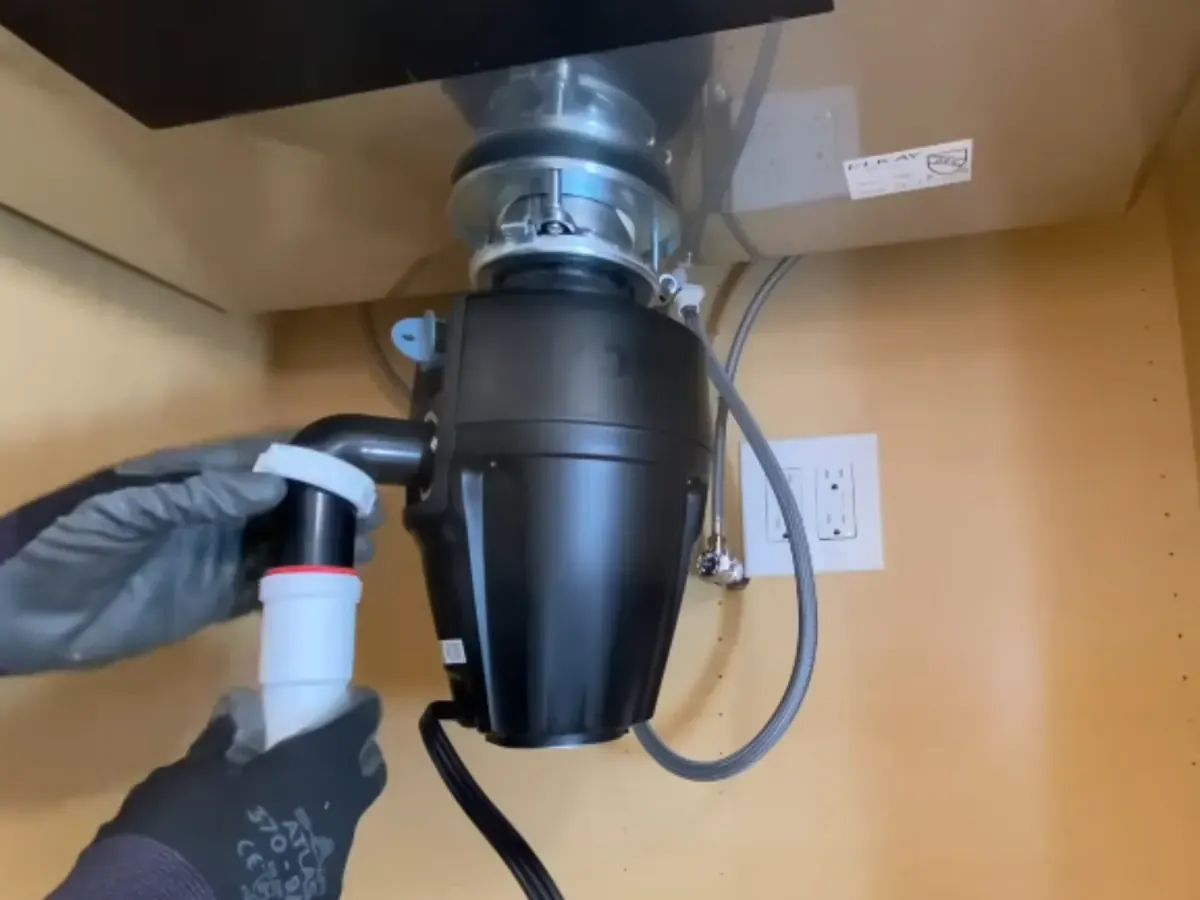
First rule: never put your hand in the disposal
Switch the disposal off at the wall and flip its circuit breaker before you look at it, and never reach into the grinding chamber with your fingers, even when it is off. Use tongs or pliers to lift out anything you can see, with a flashlight. A switched-off unit can still start if someone hits the wrong wall switch.
The disposal hums but the blades will not turn
A steady hum with no motion means the motor is trying to turn something that is stuck. The usual causes are a bone, a fruit pit, a bottle cap or a spoon wedged between the spinning plate and the shredder ring. The motor then overheats, which is why the unit may go quiet after a minute.
With power off, look under the sink for a small hex socket in the center of the motor housing. Many units have one, though not all, so check the manual. Turning it back and forth with the right hex key frees the plate. Then press the red reset button on the bottom, which pops out when the motor has tripped, and try again.
Safe checks before you call
These steps take a few minutes and do not require reaching into the unit.
Power down
Turn off the switch and the breaker, or unplug the cord under the sink.
Look from above
Use a flashlight and tongs to remove anything visible. Do not use fingers.
Turn it by hand
Use the hex key in the bottom socket, or a wooden spoon handle from above, to rock the plate free.
Press reset
The red button on the bottom pops out when the overload trips. Press it in and wait a few minutes first.
Test with water
Restore power, run cold water and flip the switch. If it hums again or trips, stop and call.
Where disposals leak
From the top flange
Where the sink meets the disposal, old plumber's putty dries and cracks. The flange needs to be reseated, which means removing the unit.
From the side hoses
The dishwasher drain hose and the discharge pipe connect at the side. A loose clamp or cracked gasket drips here, and that is a repair, not a replacement.
From the body or bottom
A leak from the shell, the seams or the bottom seal means the housing has rusted through or cracked. Replacement is the only fix.
Sink full of water and a silent disposal
Call the 24/7 line and tell the dispatcher whether it hums, trips the breaker or leaks.
Repair or install a new unit
Some disposal problems cost less to fix than to replace. Others do not.
Repair makes sense when
- A jam clears and the unit runs smoothly
- A hose clamp or dishwasher connection is loose
- The reset button is the only issue and trips only once
- The unit is fairly new and the housing is dry
- The power switch or cord is the faulty part
Replace makes sense when
- Water drips from the housing or the bottom seal
- The motor hums even after the plate frees
- The unit trips repeatedly or smells hot
- Parts of the grind chamber are corroded or pitted
- You want a stronger motor or quieter run
Whichever way it goes, you get a clear price before the plumber starts, so you can decide on the spot.
What installation involves
A new disposal bolts to a mounting ring under the sink flange. The plumber seats the flange in fresh putty, connects the discharge to the trap, and attaches the dishwasher drain if you have one. A forgotten knockout plug on the dishwasher inlet is a common mistake, and it stops the dishwasher from draining, so ask that it is removed.
The disposal also needs power. A dedicated outlet under the sink, or a hardwired connection, is typical. If you need new wiring, a licensed electrician handles that part, and a plumber should say so rather than improvising. For permit questions on new work, ask the plumber or the Easton building department.
Disposals in Easton homes, septic or sewer
Many Easton kitchens date from decades of renovation, and the sink drain behind the disposal is often older than the unit itself. Old galvanized or cast iron drain pipes catch grease and food scraps, which is why a disposal in an older house can clog the line even when it runs fine.
Septic is the key local question. Parts of Easton use private septic systems, and a disposal adds solids that a tank has to digest and store. Tell the dispatcher which system you have, and if you are on septic, consider whether a disposal belongs in your kitchen at all. Pumping the tank more often may be needed.
What to keep out of any disposal
Grease and oil, coffee grounds in bulk, fibrous stalks like celery and corn husks, pasta and rice that swell, and bones all cause trouble. Run cold water for several seconds before and after use. If the sink drain backs up, see drain cleaning.
What affects the cost of garbage disposal repair
You get a clear price before work starts. These are the factors.
What moves the price
If a leak has soaked the cabinet or floor, photograph it and ask your insurer what it covers.
☎ Want your real number? Call (508) 389-4045Follow the manual, then the code
The manufacturer's guidelines in your unit's manual come first for any reset or jam clearing, and power should be off before anyone works on the unit. Installing or replacing a disposal is plumbing work under the state plumbing code, 248 CMR.
Garbage disposal questions from Easton homeowners
Yes. The line is answered at any hour, weekends and holidays included. Switch off the unit and its breaker first, then tell the dispatcher what you see.
Something is jammed against the plate. With the power off, use the hex socket in the bottom or a wooden handle to rock it free, then press reset.
It is the overload reset. It pops out when the motor overheats or jams. If it trips again right after you reset it, call for repair.
It can work, but it adds solids and may mean more frequent pumping. A plumber can talk through your tank and system before you decide.
Yes. Food paste and grease settle in the pipe past the unit. If the water pools in the sink, our sewer line cleaning page explains when the clog is deeper.